Reading Groups in Prison

I’m excited that West Virginia University is starting a  book group that seems based, in part on Changing Lives Through Literature. I have written about CLTL here and there’s info on my blog about it as well. When I went to a conference last year in West Virginia, I talked about CLTL and lo and behold, I think it helped Katy Ryan get this group going, although she had been doing great things already with literature and writing behind bars.
reader2

This is a press release from WVA. I forgive them the use of the word, “inmate.” For more info, contact: Devon Copeland, [email protected] _______________________________________________________________

For the past 10 years, community and West Virginia University nonprofit organization the Appalachian Prison Book Project has helped imprisoned people discover the transformative power of reading.

The project began in 2004 after Katy Ryan, associate professor of English at WVU, realized the state did not have any prison book projects.

The group has received more than 20,000 letters from imprisoned people expressing how needed — and essential — reading is. Books have been shipped to men and women in West Virginia, Virginia, Maryland, Ohio, Kentucky and Tennessee.

Now, the program is starting its next chapter – a prison book club in the secure female facility at the U.S. Penitentiary Hazelton in Bruceton Mills, West Virginia.

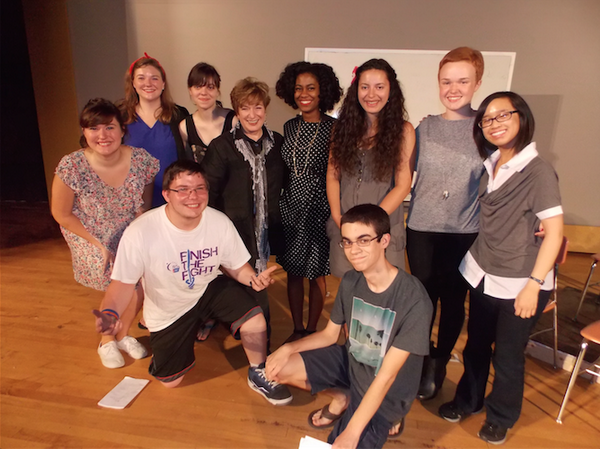
The idea for the book club grew from a discussion at last spring’s Educational Justice and Appalachian Prisons Symposium, an event co-sponsored by the Appalachian Prison Book Project. Longtime members of the project Cari Carpenter, Elizabeth Juckett and Katy Ryan are facilitating the book club.

“Prisons are built to isolate and to separate. They stand as formidable barriers between those inside and those outside. Books can lessen that isolation,” said Ryan, founder of the Appalachian Prison Book Project. “Malcolm X wrote that reading in prison changed forever the course of his life. ‘It awoke in me some long dormant craving to be mentally alive.’ We all need that intellectual and creative stimulation, and people in prison have fewer opportunities for it.”

Through reading and discussion of selected works, the group hopes to strengthen members’ analytical and communication skills, and build positive peer support and vital connections between people inside and outside prisons.

It can also foster relationships and help mend those affected by incarceration.

“One woman told us that after reading Natalie Goldberg’s Writing Down the Bones, she wanted to reach out to her son. He is going through a hard time, and she hadn’t been able to find a way to connect with him. She had not felt comfortable writing to him, but the book helped her find a way to start,” Ryan said. “She wrote her son a letter. Then they talked on the phone for the first time in seven months.

For others, it can simply be a more personal feeling.

“Several (prisoners) have talked about how a book has stayed with them and given them a new perspective or strength,” Ryan said. “The importance of reading and access to an education while inside prison certainly extends to life outside prison. Studies repeatedly conclude that those with a higher education do better once released than those without. But learning also matters while people are still in prison. Their lives, their health, their relationships, their mental faculties are not on hold. Books—and especially being able to talk with others about books—can be a real resource for living, for figuring things out.”

Every other week the book club works on creative writing. The 14-member group writes short essays and poems, reading them to one another.

“We want the book club to be flexible and responsive to the needs and ideas of participants,” Ryan said. “The women are highly motivated and dedicated to their education and growth. It’s a phenomenal group.”

Though it always accepts donations for postage, supplies and other books (including dictionaries), the group is currently seeking donations of the following titles for the book club. All donated items must be paperback.

There Are No Children Here, by Alex Koltowitz

A Lesson Before Dying, by Ernest Gaines

The God of Small Things, by Arundhati Roy

The New Jim Crow, by Michelle Alexander

I Know Why the Caged Bird Sings, by Maya Angelou

Beloved, by Toni Morrison

Discussions in the club have been fantastic and reaction to the group has been positive, Ryan said.

“Staff members (at the prison) have reached out to let me know that the women are really excited about the program and are talking about the books as they are reading them. And we know that other women are already interested in joining the next group. There is a lot of momentum.

The group says studies show rates of repeat offenses drop when inmates are given access to such materials while inside. The power of the written word, Ryan said, has the ability to change and transform.

“We often describe books as an ‘escape’ or ‘transporting’ — they move us — and yet they return us to ourselves and our moment,” she said. “The right book at the right time can adjust, even alter, the way that we think about life and the world.”
 

#ejpsymposium Day 2

Day 2 of the Education Justice Project symposium began with a session on the Politics & Ethics of Higher Education in Prison. The moderator of the panel was Earl Walker, an alum of EJP, and he said that higher education in prison truly is “the new civil rights movement.”

image
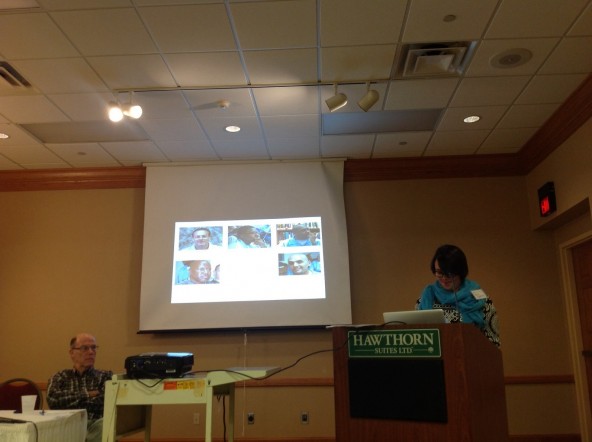
Erin Castro, up first, talked about working with scholars on the inside (pictured above with her students on the screen) and said that she presents her scholarship at national conferences and has a manuscript under review, an ms. completed with those same students. Nationally, she noted, we are not so advanced and said that only 6% of such potential scholars have access to post secondary education. But the surprise is, such education not only reduces recidivism, it is transformative education, per Paulo Freire. We cannot leave out the voices of the people inside.

After Erin, Ed Wiltse asked if prison education can return the university to core values? He said that from teaching behind bars with a mix of university and incarcerated students, the lessons he’s learned include: 1) who’s classroom, our classroom; 2) voice and authority means everyone’s 3) who’s text, our text. He then turned to Dewey: The community’s purpose is to educate and move forward.

James Kilgore (pictured above on the left) said his commitment to mass incarceration comes from his heart, and from being incarcerated as well as an educator. So when he began to cry, he moved us all. Then Wham: “I was an educator before I went to prison.” When he was in prison he wanted to teach other prisoners but the person who ran education in prison said only if you sit people in their race groups. He refused – this was a man who had been to South Africa and fought against Apartheid– so he said to that teacher, “I will get them to agree.” And the men did. From this and from his own amazing experience with EJP, he concluded: the movement of the oppressed must be lead by these who are oppressed.

Carl Walker said in some ways he felt incarcerated in higher education with a program called “college to careers.” An audience member responded to the racial segregation so enforced in prison by saying that educators need to turn to their students inside because, “We know how to navigate that space.”

In a session on peer instruction in the prison classroom, professor Jennifer Drew, mentioned that a Spanish language instruction program at BU was begun by Jose Duval, formerly incarcerated student, who spoke by phone at the conference from the Dominican Republic. One of the difficulties of being a peer tutor in the prison classroom is not being seen as a cop. But knowing the subject , he said, was not always as difficult as knowing how to convey the message. Then, Jennifer Drew, who used to run BU higher ed, was supposed to be the prof but she had students teach Spanish because they knew the language. An interesting moment for Jose was when some of the guys wanted him to tell them some of the answers on the test. But they eventually, were able to see that the tutors were serious.

Augie who was a peer instructor in an EJP carceral setting and was in an ESL program called Language Partners,  said it was initiated by a person behind bars. He felt that there was stress on his “free partners” who had to find online resources for them, because as peer teachers inside, they were not allowed resources available on the outside.  He read a paper by Elfuego Nunez who teaches, i.e. is a peer tutor, on the inside. Nunez said that he had a lot of desire to help men speak English because they wanted the power to talk to their doctors, read to their kids, and learn. For him, teaching was a honor, and while the work was voluntary and not eligible for good time, it was worth it.

The last session of the day that I went to was on Literature, and it included Sarah Higinbottom and Bill Taft from the Common Good program in Atlanta. Discussions of students gaining from making their own books, engaging in challenges such as Milton and Shakespeare are up my alley. I talked about the work I did at Framingham Women’s Prison, directing plays, showed a clip of Merchant of Venice and then poured my heart out about Changing Lives Through Literature. What a day.

Now For Some Good News: The Justice Theatre Company

A newly formed theatre group has their focus on justice and an upcoming show about prison should be on your agenda. The Justice Theatre Company, founded this year, aims to tackle serious issues such as “poverty, human trafficking, racism, or genocide,” through the stage. They are a group of theatre aficionados between the ages of 14 and 24 who aim to expose social injustice as a way to raise awareness their website says they always will “advocate for the dignity of all, as well as raise proceeds for an organization that helps to end these injustices.”

Behind Bars Official Flyer

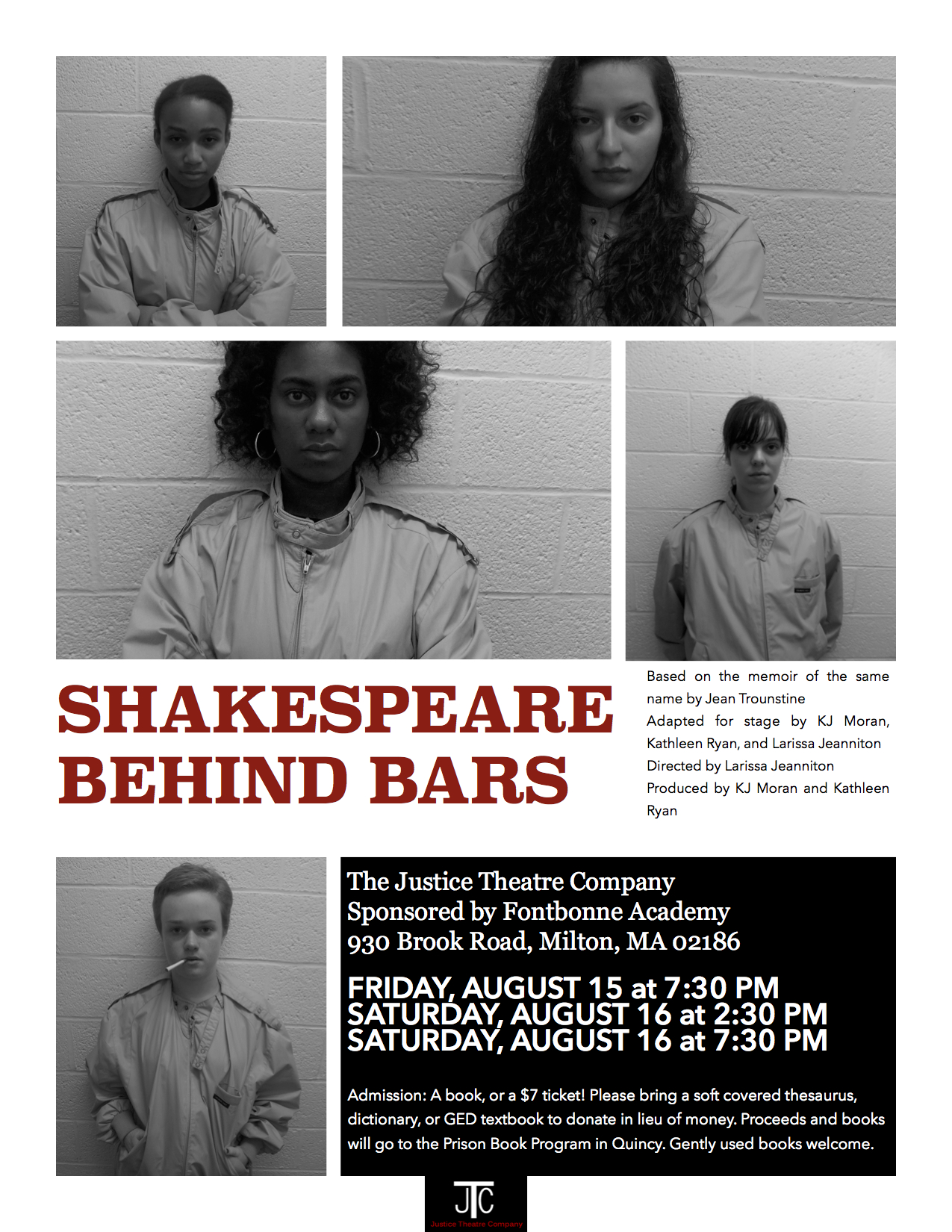
Their first production will be an adaptation of Shakespeare Behind Bars: The Power of Drama in a Women’s Prison—wait for it—my book (SBB)! On Friday, August 15, they debut, and performances continue on Saturday, August 16 (see above). Their Facebook page here https://www.facebook.com/justicetheatre has lots of photos of the company and shows are being held at Fontbonne Academy 930 Brook Road, Milton, MA 02186.

It is the first time SBB has been put on stage and I am very excited that these energetic young adults are so enthusiastic. I attended a rehearsal and they couldn’t be more professional and committed to their work. So it will be wonderful to see the finished product. They are donating all proceeds (admission is $7 or a “gently-used book”) to the Quincy Prison Book Project. Couldn’t be better in my opinion. We will be on hand for audience discussion after the show on Friday night (me) and on Saturday afternoon (a panel including the Quincy folks, a yet unnamed judge and myself). My books will be on sale at a reduced price for audience members and signed of course.

Adapted from my book, they call their play, “the thrilling tale that follows a teacher, her eight students, and their journey through life, literature, and lock-up…Jean, an idealistic teacher with a desire to change her world, comes to teach in Framingham Women’s Prison in the Fall of 1988. There, she meets Dolly, a determined prisoner serving a life sentence for her boyfriend’s murder; Bertie, a Jamaican woman who is outcast because of her horrendous crime; Rhonda, the daughter of a Marine who falls into crime in the wake of her father’s death; Kit, a former drug user who can hardly keep clean, even behind bars; Rose, an HIV+ drug addict and former prostitute who is rejected by almost every inmate because of her status during the AIDS epidemic; Cody, a troubled heroin addict and dealer, who is more concerned with love than literature; and Mamie, an arsonist who fights to finish a college class before she succumbs to the brain tumor that plagues her.

The unlikeliest of plays in the loneliest of places: how will these eight women ever come together to produce Shakespeare?”

So, meanwhile what could be more fun for me than this? I hope to see you at a show! And hats off to the newly formed Justice Theatre CompanyJusticeTheatreCompany. You probably won’t have any trouble knowing which one of the above is me.

Prison Playwrights

It’s Memorial Day weekend and many of us are still in shock from the horrible killings that happened in Santa Barbara. And so, while I turn over the intersection of gun violence, mental illness and misogyny,  I turn away too, for comfort, to the places I find hope.

Playwright.Prison


Manuel Boras, photo credit, Life of The Law

So many men and women behind bars are trying to better themselves through education, and these stories are often on page 8 or 23, tucked in a corner of the paper, or at the end of a series of online clicks. But they are hopeful stories about humanity, inspiring us that many people choose change, transforming attitudes and hearts.

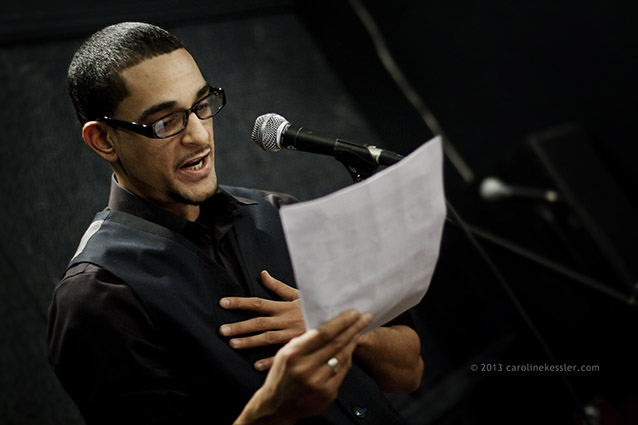
“It’s a bitter irony to admit that through imprisonment the world was opened up to me,” said Manuel Boras, who entered the Bard Prison Initiative behind bars and found playwriting enabled him to express himself with words. Now, outside, he recently completed a fellowship through the New York Public Theater’s Emerging Playwrights program and he is working on a play, Starting Over: Coming Home, about the difficulties prisoners and families face upon reentry.

Playwriting seems a natural for people who are trapped but see so much happening around them. They hear dialog that is often unbelievable to those of us on the outside. They see despair, fights, small acts of kindness. They live with a set of values different from that in so-called “civil society” that doesn’t promote expression. But writing does. And programs that offer playwriting to prisoners are more plentiful than you might think. As part of its recognition of prisoner writing behind bars, Pen America gives an award every year to an aspiring playwright. In 2013, it was Derek Trumbo, whose short play Conviction is reproduced online here. Trumbo’s play was performed in New York on March 24th, 2014, by Voices Inside/Out as one of five short prisoner-authored plays at the Engelman Recital Hall of Baruch Performing Arts Center in Manhattan.

Writing plays helps to exercise the mind, said a young prisoner in an article in The Oregonian. Denton, a twenty-four-year old confined to MacLaren Youth Facility in Woodburn, Oregon, struggled with drug addiction—heroin and meth—and was locked away for assault. Behind bars, he found writing.  “I think a lot of different things,” he said, and writing is “the only way I can get my visions out.”

In the 1970’s when I lived in California after college, I saw a play written by a playwright in prison that had a huge impact on my life. The play was The Cage by Rick Cluchey. Cluchey got into theatre in 1957, when he was serving a life sentence at San Quentin Prison for armed robbery. He heard about the famed production of Samuel Beckett’s Waiting for Godot put on for the prisoners at San Quentin, but at the time was considered a “security threat,” so did not attend. Only later did he put on his own production of the play behind bars, after he founded the San Quentin Drama Workshop, and his production also touched the prisoners with the notion that Godot never arrives.

Cluchey wrote The Cage in 1965, a year before his life sentence was commuted by then-Governor Pat Brown. It was a drama about the realities of prison life, and once outside, Cluchey found the San Francisco Actors Workshop in 1967 and produced the play, complete with former prisoners from his work behind bars; they toured dozens of campuses across the country in the ’60s and ’70s. That’s how I saw it. It was perhaps the most powerful experience I have ever had in theatre, watching men tell what prison was really like, listening to Cluchey’s words, like Beckett’s, that deal with the human condition. And seeing that cage replicated on stage, a space where no one could exit from.

Per an article in the LATimes, Cluchey’s tours with The Cage led him to Europe, “where in 1976–after years of correspondence and much persistence–he became Beckett’s assistant director for a Berlin staging of Waiting for Godot.” Imagine! A playwright now, a former prisoner sentenced to life and a man working with his hero.

Below is a clip of a production of The Cage re-staged in 1987 at a theatre in L.A. It is not the production I saw with former prisoners who truly captured the devastating cage in their performance like no one else could. But still Cluchey’s words pack a punch and show that he made meaning out of the madness he experienced and was able to turn his life around through art.

Appalachian Prisons and Beyond

This weekend I went to West Virginia with many education in prison folks from around the country to the Educational Justice and Appalachia Prisons Symposium.

Morgantown, West Virginia is a cross between a college town and scenes from A Coal Miner’s Daughter. It’s only 1 and 1/2 hours from Pittsburgh but a lot of rolling hills until you hit the city. The speakers were stellar, each adding something unique to the event. But I couldn’t stop singing “Country Roads, Take Me Home” all weekend.

The first panel with incarcerated Inside Out students was accompanied by an officer to the presentation where presenters talked about their lives, and writing while locked in a federal prison. Inside Out in WVA brings college students inside in a unique program that offers college credit to both inside and outside students, Some comments from prisoners who were in attendance: “Without the outside, us on the inside would just be talking to ourselves;” and “Not writing about mass incarceration today would be like not writing about slavery in the 19th century.” Anne Rice, a powerhouse who teaches in a prison program with Lehman University, and has coordinated TEDx talks inside prisons, was also on that panel. She reinforced recent RAND Report findings–higher ed reduces recidivism. Also raised in this panel were two important concerns: some students of color don’t want to be in Inside-out programs because they don’t want to be any nearer than they are to the CJ system. And there can be a stigma associated with doing programs.

How hard it is to get past your past with social media continuing to scarlet letter you, I thought, as audience members rightly talked about how we need to find jobs for kids coming out of the system, fix the system and not-so-much, the kids. And I thought again of what Angela Davis said recently in a talk at Babson College which knocked my socks off: “Prisons are havens for outdated ideologies.”

The next panel included Jim Rubenstein, the Commissioner of Corrections in West Virginia, who shocked me when he said West Virginia has the 4th lowest recidivism rate in the country at 27%. Why, I wondered? Do they have such long sentences that no one gets out? Considering that Massachusetts’ recidivism is closer to 60% I want to try and understand his data. The Commissioner also spoke of drug addiction and incarceration. When I spoke on Changing Lives Through Literature, I said, in response to the first two panels, that we should take the word “inmate” out of our conversation, and that we should approach drug addiction as a health problem not as a criminal justice issue (See The House I Live in). Then I spoke about the program I love that has graduated more than 5000 probationers nation-wide.

The evening was highlighted by Rebecca Ginsburg’s stunning program, Education Justice Project, which is very collaborative with people inside/outside. It is a model college-in-prison-program, and the keys are: critical pedagogy, involvement of families, and starting slowly. One of my favorite things that Ginsburg said is that the program is “about the quality of life for anyone wherever they stand.” It is not just about recidivism, or re-entry. She highlighted that at the Higher Education in Prison conference in October, 2014, prisoners will be presenters as well as scholars from the outside.

Restorative Justice (RJ) was one of the highlights of the next day. Attorney Brenda Waugh said RJ depends on humility, respect and wonder, and the central issue is to “address harm.” Victims meet with those they have harmed, and although forgiveness is not always possible, some kind of understanding is. Judge Michael Aloi said entering a courtroom is “entering intense suffering.” He talked about “restoring dignity” to people, expungement of records, and being a non-judgmental judge. Attorney Valeena Beety, who teaches at the WVA Law School, quoted Angela Davis by saying that “prison is an abstract site into which people are placed,” and it is supposedly justified by the fact that it incapacitates. Most impressive at this panel was Jacqueline Roebuck Sakho who brought her small children, asked permission of the elders in the room before she spoke, and said we cannot do restorative justice until we confront multiple narratives of the system, who is responsible for crime, and who or what is actually guiltyBkjFmc4CYAEigfK.


Brenda Waugh, Judge Aoli, and Jackie Sakho.

Kyes Stevens shocked me with this: Alabama prisons are 198% overcrowded. Stevens worked at Tutweiller Prison where abuse is rampant, she said, and then “In steps poetry.” The Alabama Prison Arts & Education Project is thriving with many sites throughout the state and many teachers. Stevens finds joy in her work in prison, knows how to bring in all the stakeholders, and my favorite comment from her: “A handful of pencils” can lead to “amazing art.”

Both the Appalachian Book Project and Books Through Bars in Philadelphia do the incredible hard work of getting books to prisoners, both in West Virginia (ABP), and up and down the east coast (BTB). Marc Niesen from Chatham University in Pittsburgh mentioned the epiphany we all have who teach/have taught inside: “I can walk out.” The Chatham program has a great resource and a video on their site with the concept that words help you get outside your cell. On that same panel was Laura Leigh Morris who teaches in a Texas prison where women say they want the writing class to be a “refuge.” Most interesting, she said, “I have to pee in a cup to teach there.” Oh Texas!

The final presentation of the weekend was Dwayne Betts, poet, former prisoner and now student at Yale Law School. He shared his experience behind bars growing into  books and words. He read from his books of poetry and I am now devouring his memoir, A Question of Freedom. What an amazing mind. I’ll leave you with a snippet from one of his poems, entitled, “A Post-Modern Two Step:”

And this is ruin. Damn these chains,
this awkward dance I do with this van. Two-step,
my body swaying back and forth, my head
a pendulum that’s rocked by the wild riffs
of the dudes I’m riding with: them white folks know
you ain’t god body, what you commune wine
and bread? Where you from son? Red lines?
To what Onion? My eyes two caskets though,
so the voices are sheets of sound. Our van as dark
inside as out, and all the bodies black
and voices black too and I tell my god
if you have ears for this one, know I want
no part of it, no Onions and no tears.
I tell no one, and cry my dirge.
This place,
the cracked and scratching vinyl seats, the loud
loud talk of murder this and blanket fear
around the rest, is where I’m most at home,
but it’s beyond where prayers reach, a point
something like purgatory. I lean back
and drift in sleep as someone says, his voice
all hoarse and jacked, all broken songbird-like
all revolutions end with a L-note.

What a weekend.